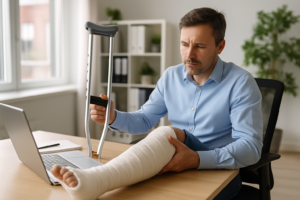

For business owners in Billings, Montana, understanding seasonal slip and fall trends isn’t just about risk management—it’s about protecting your bottom line. Montana’s dramatic seasonal shifts create distinct hazard periods that directly impact workplace slip and fall injury statistics and costs, making prevention a year-round priority rather than a reactive measure.
Montana’s Seasonal Challenges: A Data-Driven Overview
Billings experiences temperature extremes that range from below-zero winter conditions to 90-degree summer days, each bringing unique slip and fall hazards. The Montana Department of Labor reports that workplace injuries spike dramatically during transitional months, with February and March seeing the highest incident rates as freeze-thaw cycles create unpredictable surface conditions.
What makes Billings particularly challenging is our low humidity and rapid temperature fluctuations. A surface can be dry at 8 AM and covered in black ice by noon, catching employees and customers off-guard. This variability makes traditional prevention strategies insufficient without seasonal adaptation.
Winter: The High-Risk Season (November-March)
Winter dominates slip and fall incident reports in Billings, accounting for approximately 60% of annual cases. The combination of ice, snow, and Montana’s notorious wind creates multiple hazard layers that compound risk exposure for businesses.
Key Winter Risk Factors
- Black Ice Formation: Billings’ frequent freeze-thaw cycles create invisible hazards, particularly in shaded areas and building entrances
- Snow Accumulation: Averaging 57 inches annually, snow management becomes a constant operational demand
- Transitional Zones: The shift from outdoor cold to indoor heated spaces creates condensation and wet flooring
- Reduced Daylight: Early darkness increases fall risk during peak business hours
The financial implications are significant. Understanding workers compensation slip and fall costs Montana reveals that winter incidents carry higher price tags due to more severe injuries from hard, frozen surfaces. Hip fractures, head injuries, and broken wrists become more common when ice is involved.
Winter Prevention Strategies
Effective winter management requires proactive measures rather than reactive responses. Implement pre-storm protocols that include:
- Pre-dawn ice management for parking lots and walkways
- Industrial-grade entrance matting systems extending at least 15 feet inside doorways
- Hourly monitoring during active precipitation or temperature fluctuations
- Adequate exterior lighting focused on walkways and transition zones
Compliance with OSHA slip trip fall regulations businesses must follow becomes more stringent during winter months, with documentation of prevention efforts serving as critical protection against liability claims.

Spring: The Unpredictable Transition (April-May)
Spring presents deceptive challenges. While temperatures moderate, Billings experiences rapid weather shifts that create constantly changing conditions. Morning frost gives way to afternoon rain, and melting snow creates water infiltration issues that compromise interior flooring integrity.
This season sees a secondary spike in incidents as businesses prematurely reduce winter safety protocols. The cost of workplace slip and fall accidents during spring often catches business owners off-guard, as they’ve already shifted focus to other operational priorities.
Spring-Specific Hazards
- Rapid snowmelt creating unexpected water pooling
- Mud and debris tracked from unpaved areas
- Inconsistent surface conditions throughout the day
- Parking lot pothole development from freeze-thaw damage
Summer and Fall: Lower Risk, Critical Preparation Periods
While summer (June-August) shows the lowest slip and fall rates, Billings businesses face different challenges. Afternoon thunderstorms create sudden wet conditions, and dust accumulation can create surprisingly slippery surfaces when moistened.
Fall (September-October) serves as your critical preparation window. This period offers optimal conditions for infrastructure improvements, safety training, and protocol refinement before high-risk winter months return. Businesses that invest in fall preparation consistently show 30-40% fewer winter incidents.
Financial Impact and ROI of Seasonal Prevention
The economic case for seasonal slip and fall prevention is compelling. Beyond direct injury costs, businesses must consider that slip and fall injury recovery time employees require translates to lost productivity, temporary replacement costs, and potential long-term disability expenses.
Montana businesses report average costs of $28,000-$42,000 per workplace slip and fall incident when accounting for all direct and indirect expenses. For a business experiencing just two preventable incidents annually, implementing comprehensive seasonal prevention protocols typically pays for itself within the first year.
Moreover, preventing slip and fall reduces insurance costs through improved experience modification rates and potential premium reductions. Insurance carriers increasingly offer discounts for businesses demonstrating proactive, documented prevention programs.
Building Your Seasonal Prevention Calendar
Successful Billings businesses operate on seasonal prevention calendars that align safety protocols with weather patterns:
- October: Complete facility audits, equipment maintenance, and staff training refreshers
- November-March: Daily hazard monitoring, immediate response protocols, and weekly documentation reviews
- April-May: Transition protocols maintaining vigilance despite improving conditions
- June-September: Infrastructure improvements, policy updates, and preparation for next winter season
Taking Action: Your Next Steps
Understanding seasonal slip and fall trends in Billings Montana provides the foundation for effective prevention, but knowledge requires implementation to deliver results. Start by conducting a seasonal risk assessment of your facilities, identifying vulnerabilities specific to each weather pattern your business faces.
Document your current prevention efforts and identify gaps. Many Billings businesses discover they’re over-invested in certain areas while completely neglecting others. A balanced, season-specific approach consistently outperforms generic year-round protocols.
Partner with local professionals who understand Montana’s unique conditions. Your insurance carrier, local safety consultants, and facility management professionals can provide Billings-specific guidance that generic national resources cannot match.
The investment in seasonal slip and fall prevention isn’t merely a cost—it’s a strategic business decision that protects employees, customers, and your financial stability throughout Montana’s challenging climate cycles.