
Misclassifying workers in Montana isn’t just an administrative oversight—it’s a costly compliance issue that can expose your business to significant financial penalties, legal liability, and workers’ compensation complications. Understanding the distinction between independent contractors and employees is critical for Montana business owners who want to protect their operations while ensuring proper coverage.
Why Worker Classification Matters for Montana Workers’ Compensation
Montana law requires most employers to carry workers’ compensation insurance for their employees. However, independent contractors are generally not covered under your workers’ comp policy. This distinction seems straightforward until you consider the grey areas that frequently lead to misclassification.
When a worker you’ve classified as an independent contractor gets injured and is later determined to be an employee, your business faces multiple consequences. You may be liable for medical expenses, lost wages, and rehabilitation costs—expenses that would typically be covered by workers’ compensation insurance. Additionally, Montana’s Department of Labor and Industry can impose penalties for failing to maintain proper coverage.
Understanding workers compensation rights Montana employers must uphold begins with correct classification from day one.
Montana’s Legal Test for Worker Classification
Montana doesn’t rely on a single factor to determine worker status. Instead, the state uses a multi-factor test that examines the economic realities and nature of the working relationship. Courts and the Department of Labor consider several key elements:
Right to Control
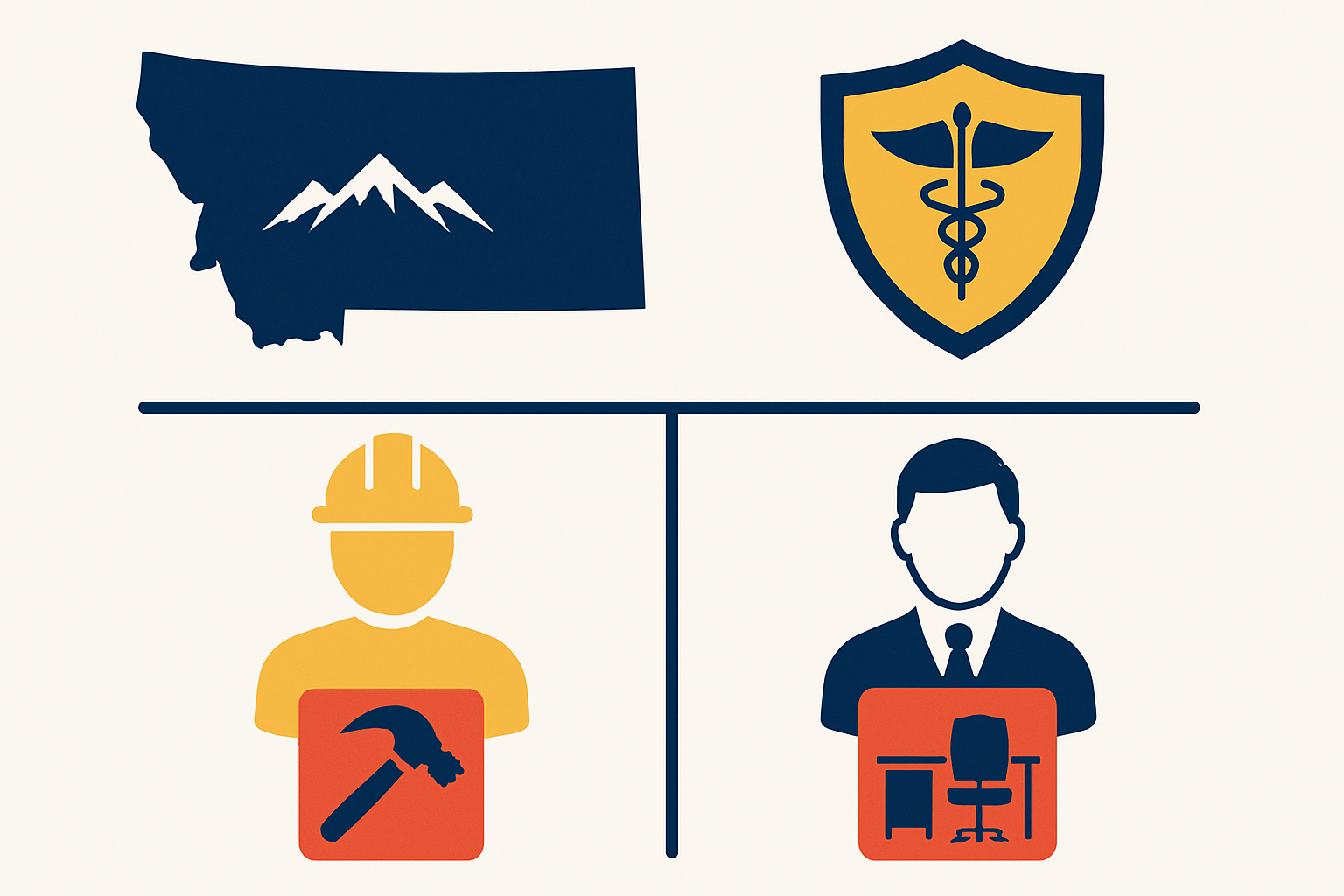
The most significant factor is who controls how, when, and where the work is performed. If your business dictates the worker’s schedule, provides detailed instructions on methods, or supervises their daily activities, this strongly suggests an employment relationship. Independent contractors typically control their own processes and deliver results according to their own methods.
Nature of Work and Business Integration
Does the work performed constitute a core function of your business? If you operate a construction company and hire someone to frame houses, that person is likely integral to your business operations—suggesting employee status. Conversely, hiring a consultant to redesign your website represents specialized, non-core work more consistent with independent contractor relationships.
Investment in Equipment and Facilities
Independent contractors typically invest in their own tools, equipment, and facilities. If your business provides the primary tools and workspace, this factor weighs toward employee classification. However, this isn’t absolute—some skilled trades require specialized equipment that contractors may reasonably provide themselves.
Opportunity for Profit or Loss
True independent contractors have the ability to increase their profits through efficient management or risk financial loss through poor business decisions. Employees typically receive fixed wages regardless of the employer’s profitability or the efficiency of their work.
Permanency of the Relationship
Long-term, indefinite relationships suggest employment, while project-based or time-limited engagements indicate independent contractor status. However, Montana courts recognize that some independent contractor relationships can be long-term if other factors support that classification.
Common Misclassification Scenarios in Montana Businesses
Certain industries in Montana face higher risks of worker misclassification. Construction, healthcare, hospitality, and professional services frequently navigate these grey areas.
Consider a Billings-based HVAC company that hires technicians as independent contractors to avoid workers’ compensation costs. If these technicians work exclusively for the company, use company vehicles, wear company uniforms, and follow company schedules, Montana authorities will likely reclassify them as employees regardless of what the contract states.
The distinction becomes particularly important when injuries occur. If a misclassified worker gets hurt on the job, they may still be entitled to workers’ compensation benefits. Your business could be responsible for those benefits plus penalties for failing to maintain proper coverage. Understanding Montana workers compensation benefits explained helps you recognize the full scope of your potential liability.
The Financial Impact of Misclassification
Beyond workers’ compensation issues, misclassification creates a cascade of financial and legal problems. Montana’s Department of Labor and Industry actively investigates misclassification complaints and conducts audits. Penalties can include:
- Back payment of workers’ compensation premiums with interest
- Administrative penalties up to $1,000 per misclassified worker per violation
- Liability for unpaid unemployment insurance taxes
- Federal consequences including unpaid Social Security, Medicare, and income tax withholding
- Potential liability for benefits that should have been provided
When an injury occurs involving a misclassified worker, the process can become complicated quickly. The injured worker may attempt to file a workers comp claim Montana employers thought they had avoided through contractor classification.
Best Practices for Montana Employers
Protecting your business starts with proactive classification practices and documentation.
Conduct Regular Classification Reviews
Worker relationships evolve. A contractor whose role expands to include more integrated, supervised work may have transitioned to employee status without formal acknowledgment. Review all worker classifications annually, particularly before renewing your workers’ compensation policy.
Document the Relationship Thoroughly
Written agreements are important but not determinative. Montana courts look beyond contracts to the actual working relationship. However, clear independent contractor agreements that accurately reflect the working relationship provide valuable documentation. Include provisions about:
- The contractor’s ability to work for other clients
- Control over work methods and schedule
- Responsibility for tools and equipment
- Invoice and payment procedures
- Tax responsibility clarification
Understand Industry-Specific Rules
Some Montana industries have specific regulations affecting worker classification. Construction, for example, has statutory employer provisions that may extend workers’ compensation responsibility up the contractor chain. Consulting with legal or insurance professionals familiar with your industry’s specific requirements is essential.
Maintain Proper Insurance Coverage
Even with careful classification, disputes can arise. Ensure your workers’ compensation policy adequately covers your workforce. If you regularly engage contractors, discuss with your insurance provider whether additional coverage or specific endorsements make sense for your business model.
What to Do If Classification Is Challenged
If a worker’s classification is questioned—whether by the Department of Labor, an insurance auditor, or an injured worker seeking benefits—respond promptly and professionally. Gather documentation about the working relationship, including contracts, payment records, and evidence of the factors supporting your classification.
In cases where an injury has occurred and a claim is filed, understanding the process becomes critical. The situation becomes even more complex if workers comp claim denied Montana scenarios arise based on classification disputes.
Keep in mind that Montana workers compensation time limits deadlines apply to various aspects of claims and disputes. Timely action protects your rights and minimizes complications.
Moving Forward With Confidence
Proper worker classification isn’t just about compliance—it’s about building a sustainable business model that protects both your company and your workers. Montana’s workers’ compensation system serves important purposes, and understanding your obligations helps you participate effectively in that system.
If you’re uncertain about any worker’s classification, err on the side of caution. The cost of workers’ compensation coverage for an employee is substantially less than the penalties, legal fees, and liability exposure that result from misclassification.
When injuries do occur and workers need to navigate returning to work after injury Montana workers comp processes, proper initial classification ensures clear rights and responsibilities for everyone involved.
For comprehensive guidance on protecting your business while ensuring proper coverage for your workforce, consult with Montana workers’ compensation professionals who understand both the legal requirements and the practical realities of your industry. The investment in proper classification today prevents far more costly problems tomorrow.