

For small business owners in Montana, understanding the legal framework surrounding wrongful death claims in Montana is essential for risk management and liability protection. When a fatality occurs on your business premises or involves your operations, proving negligence becomes the central issue that determines legal and financial outcomes.
The Four Elements Required for Proving Negligence in Montana Wrongful Death Cases
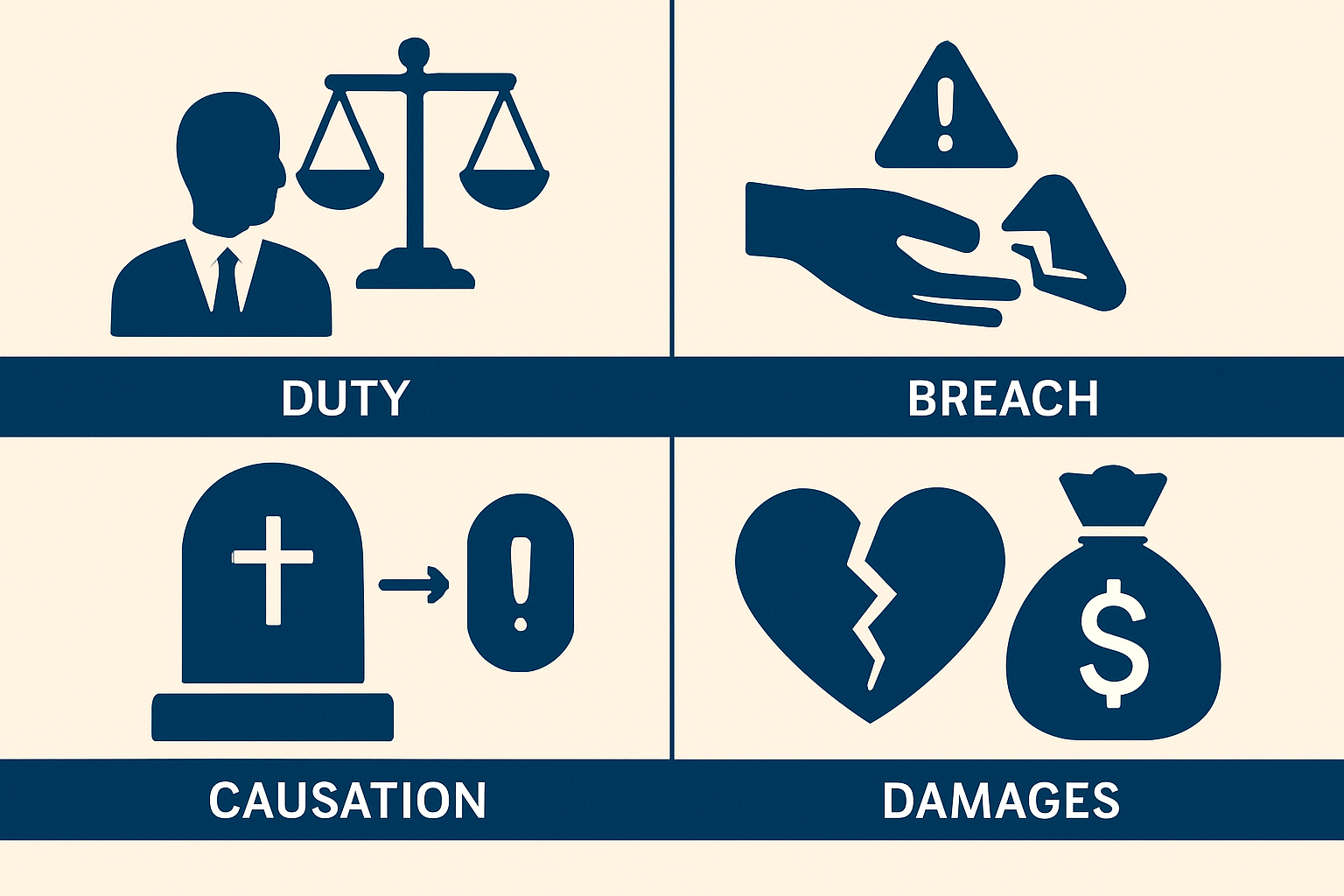
Montana courts require plaintiffs to establish four distinct elements when proving negligence in wrongful death cases. As a business owner, understanding these elements helps you assess your exposure and implement preventive measures.
1. Duty of Care
The first element requires establishing that your business owed a duty of care to the deceased. In Montana, this duty varies depending on the relationship between your business and the individual. For customers on your premises, you have a duty to maintain reasonably safe conditions. For employees, you must provide a workplace free from recognized hazards. The specific duty owed forms the foundation of any negligence claim.
2. Breach of Duty
Once duty is established, plaintiffs must demonstrate that your business breached that duty through action or inaction. This might include failing to repair known hazards, inadequate employee training, or violation of industry safety standards. Montana courts evaluate breaches against the “reasonable person” standard—what would a prudent business owner have done under similar circumstances?
3. Causation
The breach must directly cause the death. Montana recognizes both actual cause (“but for” causation) and proximate cause (foreseeability). This element often becomes contested territory, as plaintiffs must prove that your business’s negligence was the determining factor in the fatality, not merely a contributing circumstance.
4. Damages
Finally, who can file a wrongful death lawsuit in Montana must demonstrate compensable damages. These typically include medical expenses, funeral costs, lost income, and loss of companionship. The quantifiable nature of wrongful death damages available in Montana directly impacts settlement negotiations and trial outcomes.
Evidence Standards in Montana Wrongful Death Negligence Cases
Montana law requires plaintiffs to prove negligence by a “preponderance of the evidence”—meaning it’s more likely than not (greater than 50%) that negligence occurred. This standard, lower than the criminal “beyond reasonable doubt” threshold, means businesses face heightened vulnerability in civil wrongful death litigation.
Types of Evidence Commonly Used
Successful negligence claims typically rely on multiple evidence categories:
- Physical evidence: Accident scene documentation, equipment defects, or hazardous conditions
- Documentary evidence: Safety inspection records, maintenance logs, training documentation, and internal communications
- Witness testimony: Employees, customers, or expert witnesses who can speak to standard practices and breaches
- Expert analysis: Industry specialists who evaluate whether your business met applicable safety standards
- Regulatory violations: OSHA citations, health department violations, or other regulatory non-compliance
From a business perspective, your documentation practices directly impact your defense capabilities. Comprehensive records of safety protocols, training programs, and maintenance schedules provide crucial defense evidence when proving negligence becomes contested.
Comparative Negligence in Montana Wrongful Death Cases
Montana follows a modified comparative negligence rule, which significantly impacts how negligence is proven and apportioned. Under this doctrine, if the deceased bears partial responsibility for the incident, damages may be reduced proportionally—but only if the deceased’s fault remains below 51%.
For business owners, this creates strategic defense opportunities. Successfully demonstrating that the deceased contributed to their own death through reckless behavior, ignoring warnings, or violating safety protocols can substantially reduce your liability. However, this defense requires careful handling, as it can appear insensitive and potentially backfire with juries.
Industry-Specific Negligence Standards
Montana courts evaluate negligence against industry-specific standards. Construction companies face different expectations than retail establishments. Healthcare facilities must meet medical standards of care. Transportation businesses must comply with federal and state regulations governing vehicle operation and maintenance.
Understanding your industry’s specific duty of care helps you identify areas of vulnerability. Billings-area businesses should regularly consult with industry associations and legal counsel to ensure their safety protocols meet or exceed current standards, as outdated practices can serve as compelling evidence of negligence.
The Role of Statutory Violations in Proving Negligence
Montana recognizes the doctrine of negligence per se, where violation of a safety statute automatically establishes breach of duty. If your business violates an OSHA regulation, building code, or other safety law designed to prevent the type of harm that occurred, plaintiffs can more easily prove negligence.
This doctrine makes regulatory compliance non-negotiable from a risk management perspective. The financial investment in meeting all applicable safety standards pales in comparison to potential Montana wrongful death settlement amounts, which frequently reach six or seven figures.
Timeline Considerations for Business Defense
The Montana wrongful death statute of limitations provides a three-year window for filing claims. However, your evidence preservation efforts must begin immediately following any fatal incident. Surveillance footage, witness memories, and physical conditions deteriorate rapidly, making immediate documentation essential for defending against negligence allegations.
Financial Implications and Insurance Considerations
Understanding how negligence is proven impacts your insurance planning. General liability policies typically cover negligence-based wrongful death claims, but gross negligence or intentional misconduct may fall outside coverage. When evaluating wrongful death attorney fees Montana businesses might face, remember that defense costs alone can exceed $100,000 even before any settlement or judgment.
Proactive Risk Management Strategies
The best defense against wrongful death negligence claims is prevention. Small business owners should implement:
- Comprehensive safety audits identifying potential hazards
- Documented employee training programs with signed acknowledgments
- Regular equipment maintenance with detailed records
- Clear safety policies communicated to all stakeholders
- Incident reporting systems that capture near-misses
- Regular legal compliance reviews with qualified counsel
These measures not only reduce the likelihood of fatal incidents but create the documentary evidence necessary to defend against negligence claims should tragedy occur.
Conclusion: Balancing Legal Compliance and Business Operations
Proving negligence in Montana wrongful death cases requires plaintiffs to establish duty, breach, causation, and damages—but as a business owner, your focus should be on ensuring these elements cannot be proven against you. Through rigorous safety protocols, comprehensive documentation, and proactive risk management, you protect both your employees and customers while safeguarding your business from catastrophic legal liability.
The intersection of moral responsibility and legal obligation makes wrongful death negligence a critical concern for Montana businesses. By understanding how negligence is proven and implementing robust preventive measures, you demonstrate the duty of care that both the law and your community expect.