
Chemical burn injuries represent one of the most serious workplace hazards facing Montana businesses, particularly in manufacturing, agriculture, cleaning services, and construction industries. As a small business owner, understanding chemical burn injury at work rights isn’t just about legal compliance—it’s about protecting your workforce, minimizing liability exposure, and safeguarding your company’s financial stability.
Understanding Chemical Burn Injuries in the Workplace
Chemical burns occur when skin or eyes come into contact with corrosive substances including acids, alkalis, oxidizers, solvents, or reducing agents. Unlike thermal burns, chemical burns continue causing tissue damage until the chemical is completely removed or neutralized. Common workplace chemicals that cause burns include:
- Industrial cleaners and degreasers
- Agricultural fertilizers and pesticides
- Manufacturing acids and bases
- Concrete and cement mixtures
- Battery acids
- Paint strippers and solvents
The severity of chemical burns can range from first-degree surface injuries to third degree burn injury compensation cases involving deep tissue destruction, disfigurement, and permanent disability.
Your Legal Obligations as a Montana Employer
Montana law requires employers to maintain a safe working environment and carry workers’ compensation insurance. When a chemical burn injury occurs on your premises or during work activities, several legal frameworks come into play simultaneously:
Workers’ Compensation Coverage
Montana’s workers’ compensation system provides no-fault coverage for workplace injuries, including chemical burns. This means injured employees receive benefits regardless of who was at fault, but in exchange, they generally cannot sue you directly for damages. However, this protection only applies when you’ve maintained proper coverage and followed safety regulations.
Understanding the full scope of workplace burn injury claims Montana helps you prepare appropriate response protocols and documentation procedures.
OSHA Compliance Requirements
The Occupational Safety and Health Administration (OSHA) mandates specific protections for workers handling hazardous chemicals. Your responsibilities include:
- Maintaining Safety Data Sheets (SDS) for all hazardous chemicals
- Providing appropriate personal protective equipment (PPE)
- Training employees on chemical handling procedures
- Installing emergency eyewash stations and safety showers
- Implementing hazard communication programs
- Conducting regular safety audits
Failure to meet OSHA standards can result in citations, fines, and increased liability exposure if injuries occur.
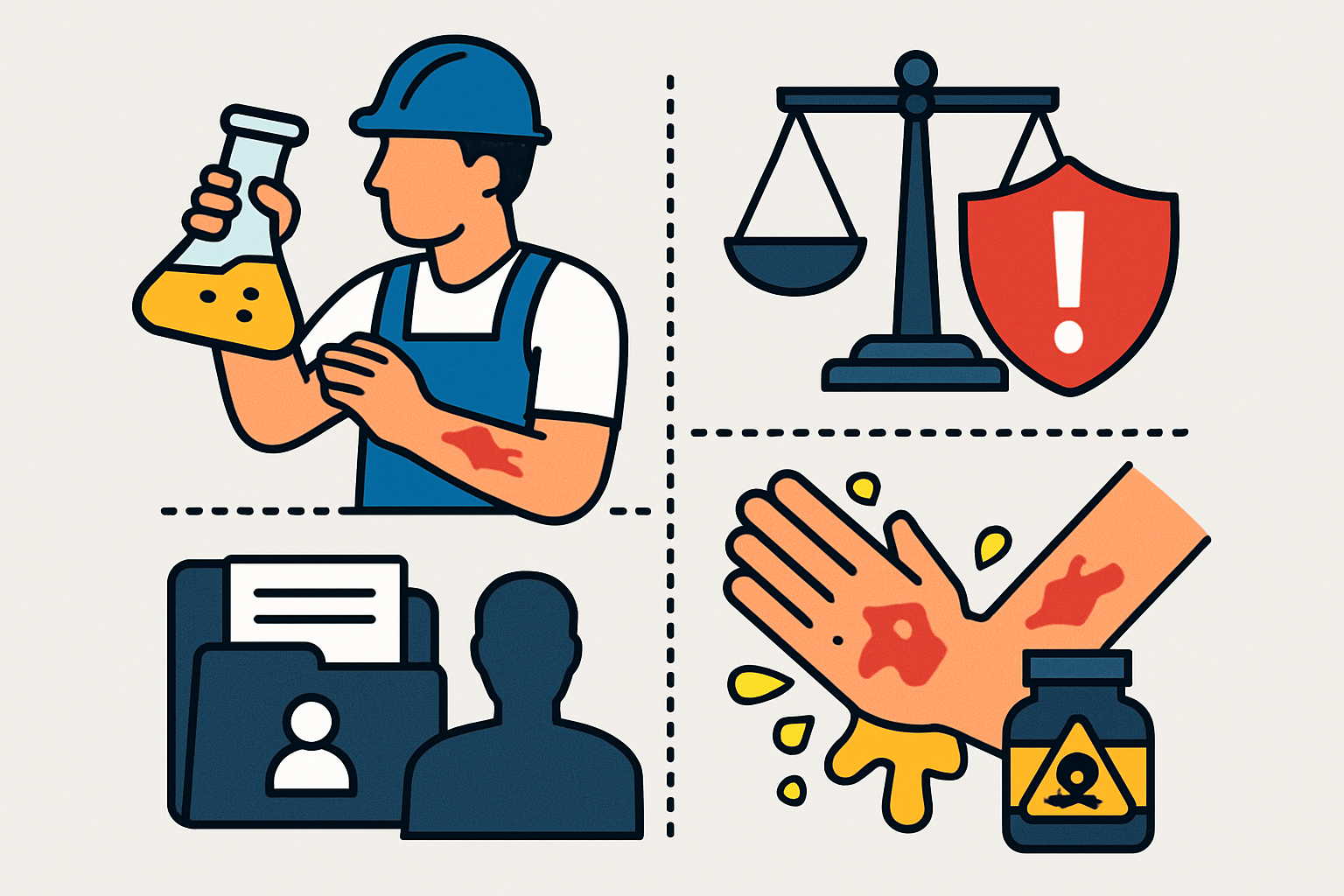
Employee Rights Following Chemical Burn Injuries
When chemical burn injuries occur, your employees have specific rights under Montana law. Understanding these rights helps you respond appropriately and maintain legal compliance:
Immediate Medical Treatment Rights
Injured workers have the right to immediate emergency medical care. Delaying treatment for chemical burns can worsen injuries and increase your liability. Employees can choose their treating physician after initial emergency care, though you may designate a panel of approved providers.
Workers’ Compensation Benefits
Employees suffering chemical burns are entitled to:
- Full coverage of medical expenses related to the injury
- Wage replacement benefits during recovery periods
- Vocational rehabilitation if they cannot return to their previous position
- Permanent partial disability benefits for lasting impairments
- Death benefits for family members in fatal cases
The comprehensive framework of burn injury legal rights Montana extends beyond workers’ compensation in certain circumstances.
Third-Party Liability Claims
If defective equipment, negligent contractors, or product failures caused the chemical burn, employees may pursue third-party claims outside the workers’ compensation system. These situations can affect your business if you’re named in lawsuits or if your insurance coverage proves inadequate.
When Exceptions to Workers’ Compensation Apply
While workers’ compensation generally protects employers from direct lawsuits, exceptions exist that small business owners must understand:
Intentional Harm: If an employer deliberately exposes workers to dangerous chemicals knowing injury will result, employees may sue directly for damages.
Lack of Coverage: Operating without required workers’ compensation insurance eliminates your lawsuit protection entirely.
Contractor Relationships: Misclassifying employees as independent contractors can create significant liability exposure when injuries occur.
Understanding Montana premises liability burn cases becomes crucial if contractors, visitors, or customers suffer chemical burns on your property.
Financial Impact and Settlement Considerations
Chemical burn injuries can generate substantial costs affecting your business’s bottom line. Beyond direct workers’ compensation premiums, consider:
- Increased insurance premiums following claims
- OSHA fines for safety violations
- Lost productivity during investigations
- Potential reputation damage
- Legal defense costs if third-party claims arise
The burn injury settlement amounts Billings businesses face demonstrate why prevention remains more cost-effective than managing claims after incidents occur.
Critical Time Limitations
Montana imposes strict deadlines for workplace injury claims. Employees must report chemical burn injuries promptly, and claims must be filed within specified timeframes. As an employer, you’re required to:
- Report serious injuries to your insurer within required timeframes
- Document incident details immediately
- Preserve evidence including chemical containers, safety equipment, and witness statements
- Maintain records per state retention requirements
Awareness of the Montana burn injury statute of limitations helps you maintain appropriate documentation and respond to claims effectively.
Best Practices for Risk Management
Proactive measures significantly reduce your exposure to chemical burn injury claims:
Develop Comprehensive Safety Protocols
Create written procedures for handling every hazardous chemical in your workplace. Include emergency response steps, required PPE, and proper storage requirements. Review and update protocols annually or when introducing new chemicals.
Invest in Employee Training
Regular training sessions on chemical safety should be mandatory for all employees working with or near hazardous substances. Document all training sessions and maintain records demonstrating compliance.
Conduct Regular Safety Audits
Monthly inspections of chemical storage areas, PPE condition, and emergency equipment functionality help identify hazards before injuries occur. Address deficiencies immediately.
Maintain Proper Insurance Coverage
Review your workers’ compensation and general liability policies annually to ensure adequate coverage for your operations. Consider umbrella policies for additional protection against catastrophic claims.
Responding to Chemical Burn Incidents
When chemical burns occur despite preventive measures, your immediate response affects both employee outcomes and legal exposure:
- Activate emergency protocols immediately—flush affected areas with water for at least 20 minutes
- Call emergency services for serious burns
- Secure the scene and identify the chemical involved
- Document everything including witness statements, photos, and chemical identification
- Report the incident to your workers’ compensation carrier promptly
- Cooperate fully with investigations while consulting legal counsel
- Never admit fault or make statements about liability
Protecting Your Business and Your Team
Understanding chemical burn injury at work rights creates a foundation for both legal compliance and operational excellence. Montana small business owners who prioritize chemical safety, maintain proper insurance coverage, and respond appropriately to incidents position themselves to weather workplace injury claims while protecting their most valuable asset—their employees.
The intersection of workers’ compensation law, OSHA regulations, and Montana-specific requirements creates a complex legal landscape. Consulting with experienced legal and insurance professionals ensures your business maintains appropriate protections while fostering a genuinely safe work environment. Prevention through proper training, equipment, and protocols remains infinitely more cost-effective than managing the aftermath of serious chemical burn injuries.